


History of Zagreb: From Prehistoric Settlements to a Contemporary European Metropolis
The history of Zagreb is a centuries-long narrative of uniting rival hilltop communities, navigating geopolitical shifts at the crossroads of Central Europe and the Mediterranean, and transforming medieval defensive settlements into a modern Central European capital. Established at a strategic junction where the southern slopes of Mount Medvednica meet the fertile alluvial plains of the Sava River, Zagreb evolved from two distinct historical cores—the ecclesiastical Kaptol and the civil Gradec—whose unification in 1850 laid the foundation for the contemporary city.
Prehistoric Foundations and Classical Antiquity
Although organized urban life documented in written records began in the late 11th century, the broader Zagreb basin has been continuously inhabited since the early Paleolithic era.
Prehistoric Horizons of Medvednica and the Sava Plains
The earliest physical traces of human presence in the Zagreb area were discovered inside the Veternica Cave on the southwestern slopes of Mount Medvednica. Sediment layers yielded Mousterian stone tools used by Neanderthals, along with skeletal remains of extinct Pleistocene fauna, primarily the cave bear (Ursus spelaeus).
With the advent of settled agricultural life during the Neolithic and Eneolithic periods, human settlements spread along waterways and lower elevations:
Bronze Age: Artifacts from the Urnfield culture (excavated in the old suburb of Vlaška, Vrapče, and across the Grič plateau) provide clear evidence of advanced metallurgy and dense settlement.
Iron Age: Characterized by the arrival of Illyrian and Celtic tribes (specifically the Scordisci and Taurisci), who constructed fortified hillfort settlements, introduced the potter's wheel, and initiated local coin minting.
Roman Rule and the Municipality of Andautonia
Following the establishment of Roman authority in the 1st century BC and the integration of the territory into the province of Pannonia, the primary urban, logistical, and commercial hub of this Posavina sector became Andautonia(present-day Šćitarjevo, situated approximately ten kilometers southeast of contemporary downtown Zagreb).
Urban Infrastructure: Archaeological excavations have uncovered remains of a central forum, public thermal baths featuring hypocaust underfloor heating systems, organized sewage networks, basilicas, and paved stone roads.
Geostrategic Function: Andautonia served as an active river port along the Sava and formed a vital node within the Roman imperial road network connecting Siscia (Sisak), Poetovio (Ptuj), and Emona (Ljubljana).
Early Christianity: The territory maintains historical connections to early Christian traditions associated with Saint Quirinus of Siscia, bishop and martyr.
Following the decline of the Western Roman Empire and subsequent migratory invasions by Avars and Slavs during the late 6th and early 7th centuries, Andautonia was sacked and abandoned. The surviving Romanized population and newly settled Slavic groups retreated toward the naturally fortified southern ridges of Mount Medvednica.
Medieval Foundations: Two Hills and Divergent Destinies
The defining characteristic of medieval Zagreb was its dual, often adversarial civic framework. Two adjacent hills, separated by the valley and course of the Medveščak stream, grew into autonomous administrative, legal, and economic entities.
Establishment of the Diocese of Zagreb (1094)
The recorded history of Zagreb formally begins in 1094, when the Hungarian King Ladislaus I of Hungary founded the Diocese of Zagreb. This ecclesiastical foundation aimed to consolidate royal authority and Christian church hierarchy across Slavonia following succession conflicts within the medieval Croatian kingdom.
Bishop Duh and the Development of Kaptol
King Ladislaus appointed a Czech cleric named Duh as the first Bishop of Zagreb, chosen for his theological scholarship and administrative discipline. The diocese was placed under the archdiocese of Esztergom (and subsequently Kalocsa).
King Ladislaus granted the new diocese vast territorial domains spanning between the Sava and Drava rivers, transforming the bishop into one of the most powerful feudal lords in the kingdom.
Surrounding the bishop's cathedral, the college of canons—Kaptol—was formed. Kaptol managed church properties, organized religious administration, and performed the duties of a "place of authentication" (locus credibilis), a medieval public notary that drafted, registered, and validated legal deeds, testaments, and land charters.
Construction of the initial Romanesque-Gothic cathedral (dedicated to Saint Stephen the King) spanned over a century and was formally consecrated in 1217 in the presence of King Andrew II prior to his departure for the Fifth Crusade.
The Mongol Invasions and the Golden Bull of King Béla IV (1242)
A decisive turning point for the civilian settlement of Zagreb occurred in the winter of 1241–1242, when Mongol forces under Batu Khan swept through Hungary and Croatia in pursuit of King Béla IV of Hungary.
During the campaign, Mongol units leveled the unfortified Kaptol settlement and devastated the newly consecrated cathedral. Recognizing that open settlements could not withstand mobile nomadic armies, King Béla IV revised imperial defense policy, mandating the construction of fortified stone towns.
The Golden Bull: The Charter of Gradec
In recognition of the refuge and material assistance provided by the residents of Gradec, King Béla IV issued the historic Golden Bull of 1242 (Zlatna bula) on November 16, 1242, in Virovitica:
Free Royal City Status: Gradec was formally released from feudal subjection to the local bishop, the Ban of Croatia, and county judges, answering directly to the crown (the royal tavernier).
Civic Autonomy: Citizens received the statutory right to elect their chief municipal magistrate—the city judge (gradski sudac)—and twelve town councilors (prisežnici), alongside autonomous judicial jurisdiction.
Commercial Privileges: The charter granted rights to hold weekly markets and an extensive annual two-week St. Mark's Fair, laying the bedrock for enduring commercial prosperity.
Fortification Mandate: The primary statutory obligation imposed upon the burghers was the construction of perimeter stone defense walls and battlements entirely at their own expense.
Between 1242 and 1266, an irregular triangular circuit of massive stone fortifications was erected around Gradec. Heavy defense towers were constructed, among which Lotrščak Tower (housing the bell campana latrunculorum that signaled the closing of city gates at dusk) and Popov Toranj survive, alongside the fortified Stone Gate (Kamenita vrata), the principal eastern gate of Upper Town.
Medieval Rivalries: Clashes Between Gradec and Kaptol
Despite their geographic proximity, Gradec and Kaptol engaged in continuous political and territorial rivalries that regularly escalated into armed violence:
Economic Friction: Disputes arose regarding toll collection rights, ownership of grain watermills lining the Medveščak stream, and jurisdictional boundaries over tenant-settled suburbs such as Nova Ves and Vlaška Street.
Krvavi Most (The Bloody Bridge): The Medveščak stream crossing connecting the two communities (today's Tkalčićeva Street) was a recurring battleground for skirmishes, giving the site its historical name—Bloody Bridge (Krvavi most).
Political Alignments and Excommunications: During dynastic succession struggles, the two hills frequently backed opposing royal claimants. When Gradec burghers stormed Kaptol in 1396 and plundered the bishop's palace, the Bishop of Zagreb issued an official ecclesiastical interdict and excommunication against the entire population of Gradec, halting religious services across the town for several years.
Early Modern Era: The Bulwark of Christendom and the Counter-Reformation
Following the fall of the medieval Kingdom of Bosnia to the Ottoman Empire in 1463 and the defeat of the Croatian nobility at the Battle of Krbava Field in 1493, Ottoman cavalry raids penetrated the direct environs of Zagreb, burning rural villages throughout Turopolje and Posavina.
Fortifying Kaptol and the Bishop's Palace
Recognizing the inadequacy of timber palisades against artillery, King Matthias Corvinus authorized Bishop Osvald Tuz to erect stone Renaissance fortifications. Between 1469 and 1478, and subsequently under Bishop Toma Bakač Erdődy during the early 16th century, Kaptol was enclosed within stone walls and circular defensive bastions, including the prominent Bakač Tower (demolished in the early 20th century).
Zagreb became a crucial rear stronghold supporting the Croatian Military Frontier (Vojna krajina) and defending the remaining territory known in contemporary records as Reliquiae reliquiarum olim inclyti regni Croatiae (The Relics of the Relics of the Once Glorious Kingdom of Croatia).
Arrival of the Jesuits and the Rise of Education
At the start of the 17th century, amid Counter-Reformation initiatives, the Jesuit order (Societas Jesu) arrived in Gradec in 1606 upon invitation by the municipal council, driving educational and institutional reform:
The Classical Gymnasium: In 1607, the Jesuits opened the Classical Gymnasium (Klasična gimnazija), the oldest continuously operating secondary education institution in Croatia.
Foundations of the University: Within the Jesuit college, higher courses in philosophy and theology were established. On September 23, 1669, Holy Roman Emperor Leopold I granted the Jesuit Academy full university status and royal academic privileges, establishing the formal legal origins of the University of Zagreb.
Baroque Architecture: The Jesuits built the monumental Church of Saint Catherine (1620–1632), widely considered the most prominent early Baroque sacral structure in Zagreb, decorated with stucco ornamentation and illusionist ceiling frescoes. Nearby, monasteries were constructed by the Capuchins and the Poor Clares (the latter complex now housing the Zagreb City Museum).
Transition to Croatia's Political Capital
Throughout the Middle Ages, the Croatian Parliament (Sabor) convened across various administrative centers, including Križevci, Bihać, Knin, and Varaždin. From the 16th century onward, Zagreb increasingly served as the regular assembly site:
In 1712, meeting on Gradec, the Croatian Sabor enacted the Croatian Pragmatic Sanction, autonomously recognizing the female line of Habsburg succession in favor of Maria Theresa.
The Great Fire of Varaždin (1776): Until 1776, Varaždin had served as the operational administrative seat of the kingdom where the Croatian Royal Council (Consilium Regium) conducted official business. Following a massive fire that destroyed much of Varaždin, the Royal Council and the Ban's official government moved permanently to Zagreb, consolidating the city's status as the political, legislative, and administrative capital of Croatia.
The Nineteenth Century: Civic Unification and National Revival
The 19th century brought rapid social, urban, and political transformations, elevating Zagreb from a regional market town of roughly four thousand inhabitants into the central engine of the modern Croatian national movement.
The Croatian National Revival and the Illyrian Movement
During the 1830s and 1840s, Zagreb served as the intellectual capital of the Croatian National Revival (Hrvatski narodni preporod) led by Ljudevita Gaj, Count Janko Drašković, and Vjekoslav Babukić:
In 1835, Gaj established Novine Horvatzke alongside the literary supplement Danica Horvatzka, Slavonzka y Dalmatinzka, which unified South Slavic printing around the Shtokavian dialect and modern orthography.
Foundational national cultural institutions were organized, including the Illyrian Reading Room (1838) and Matica Ilirska (1842, later Matica hrvatska).
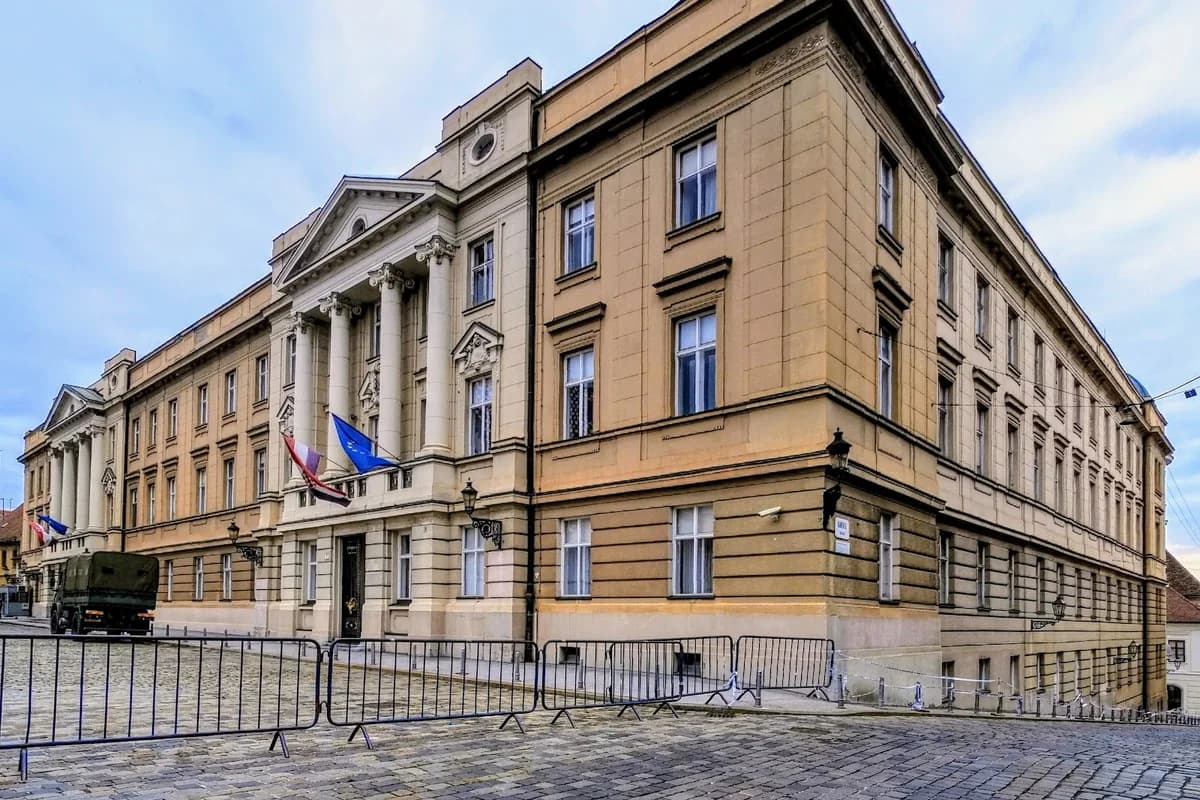
Ivan Kukuljević Sakcinski's Parliamentary Speech: On May 2, 1843, in the parliament hall on St. Mark's Square, Kukuljević delivered the first parliamentary speech in the Croatian language, petitioning to replace Latin with the vernacular tongue. On October 23, 1847, the Sabor officially enacted Croatian as the nation's sole official administrative language.
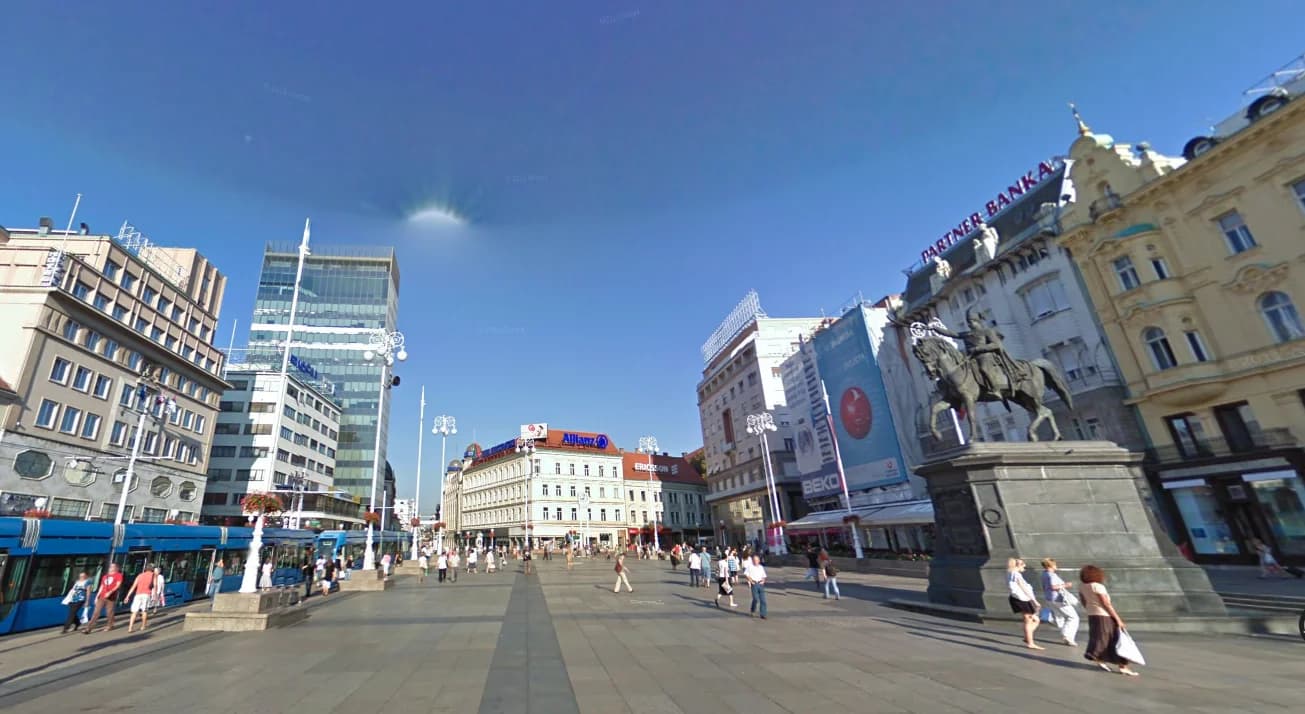
During the revolutionary events of 1848, the Sabor drafted the Demands of the People, abolished serfdom, and Ban Josip Jelačić severed formal administrative ties with the revolutionary government in Budapest. The principal commercial market square—formerly known as Harmica—was officially renamed Ban Josip Jelačić Square in his honor.
The Imperial Patent of 1850: Unification of the City
Administrative division had long constrained infrastructural and economic expansion. Endorsed by Ban Jelačić, Emperor Franz Joseph I of Austria signed the historic imperial patent on September 7, 1850, joining the four historical jurisdictions into a unified civic municipality:
The Royal Free City of Gradec,
The Ecclesiastical Borough of Kaptol,
The suburb of Nova Ves,
The civil district of Vlaška Street and its surrounding worker quarters.
Josip (Janko) Kamauf, the last serving town magistrate of Gradec, was chosen as the first Mayor of the unified City of Zagreb. At the time of unification, the combined urban population stood at approximately 16,000 residents.
Two years later, in 1852, Pope Pius IX issued a papal bull elevating the Diocese of Zagreb to the rank of an Archdiocese, naming Archbishop Juraj Haulik as Croatia's first archbishop and cardinal, which detached the local church hierarchy from historical Hungarian ecclesiastical jurisdiction.
The Great Earthquake of 1880 and Historicist Urban Planning
On the morning of November 9, 1880, at 7:03 AM, an earthquake measuring 6.3 on the Richter scale struck Zagreb, centered directly beneath Mount Medvednica.
While structural collapses caused two direct fatalities, infrastructural damage was extensive: over 1,700 buildings were damaged or rendered uninhabitable, including the cathedral, St. Mark's Church, and numerous public buildings.
Modernization under Herman Bollé and Milan Amruš
The disaster catalyzed the most ambitious period of urban planning and civil construction in Zagreb's history:
Infrastructure Master Plans: Under Mayors Matija Mrazović, Dr. Milan Amruš, and Dr. Adolf Mošinsky, municipal infrastructure modernized rapidly: the municipal waterworks opened in 1878, public gas lighting expanded, Zagreb Central Railway Station (Glavni kolodvor) opened in 1892, a horse-drawn tram system was launched in 1891, and the Zagreb Funicular began operation in 1890.
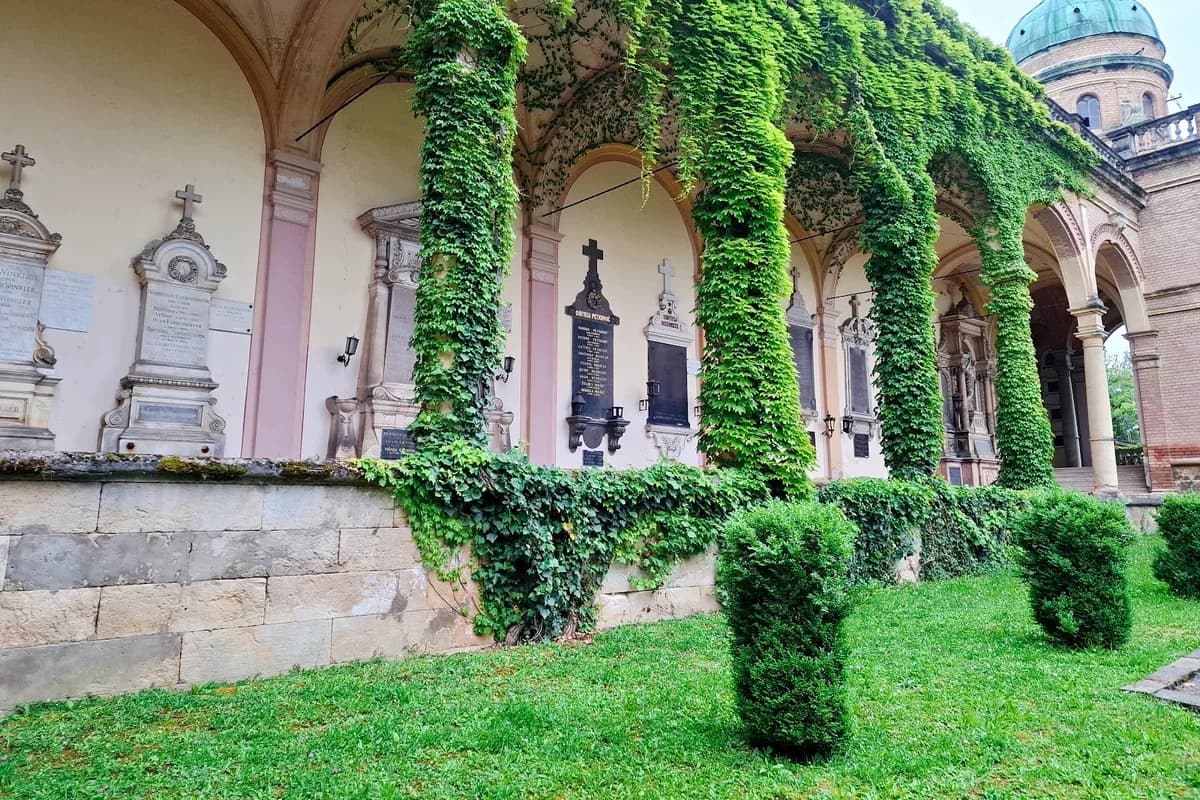
Herman Bollé: The prominent architect reshaped Zagreb's architectural identity. Bollé directed the Neo-Gothic reconstruction of Zagreb Cathedral, adding its signature twin 108-meter spires, designed the monumental arcades and layout of Mirogoj Cemetery, and constructed the Museum of Arts and Crafts and the Crafts School.
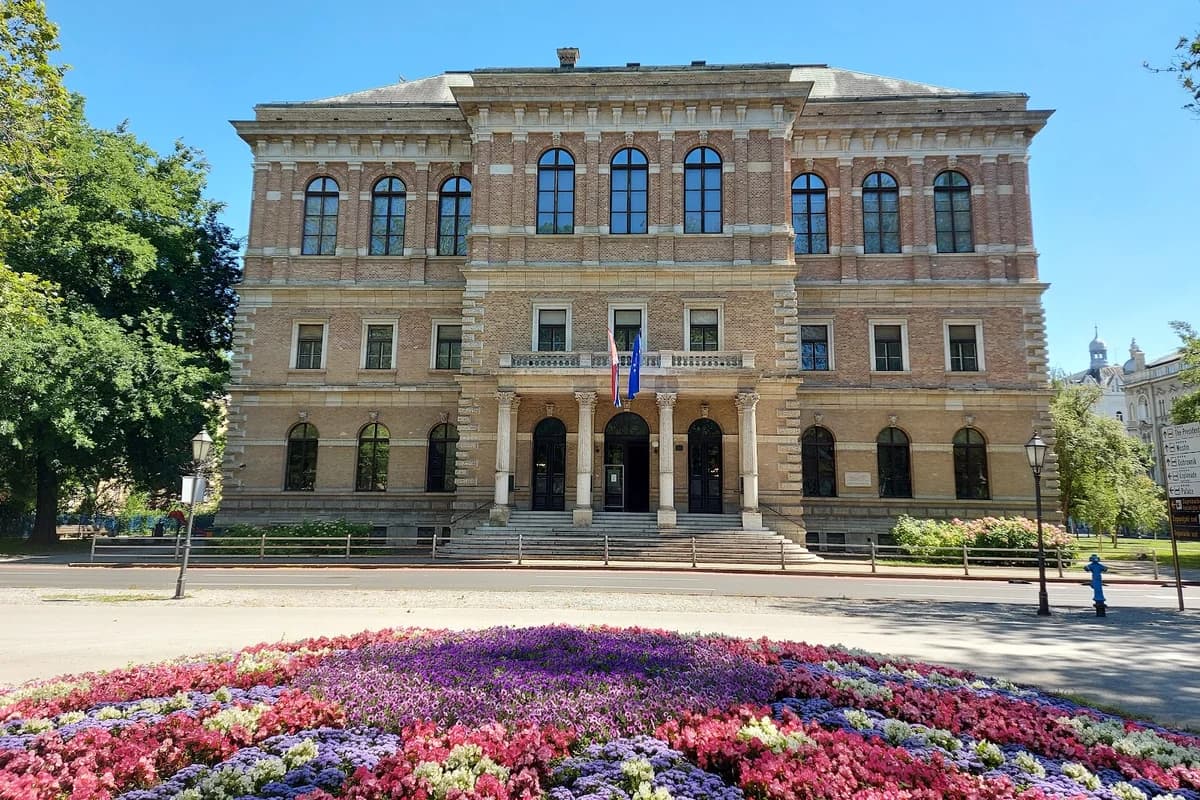
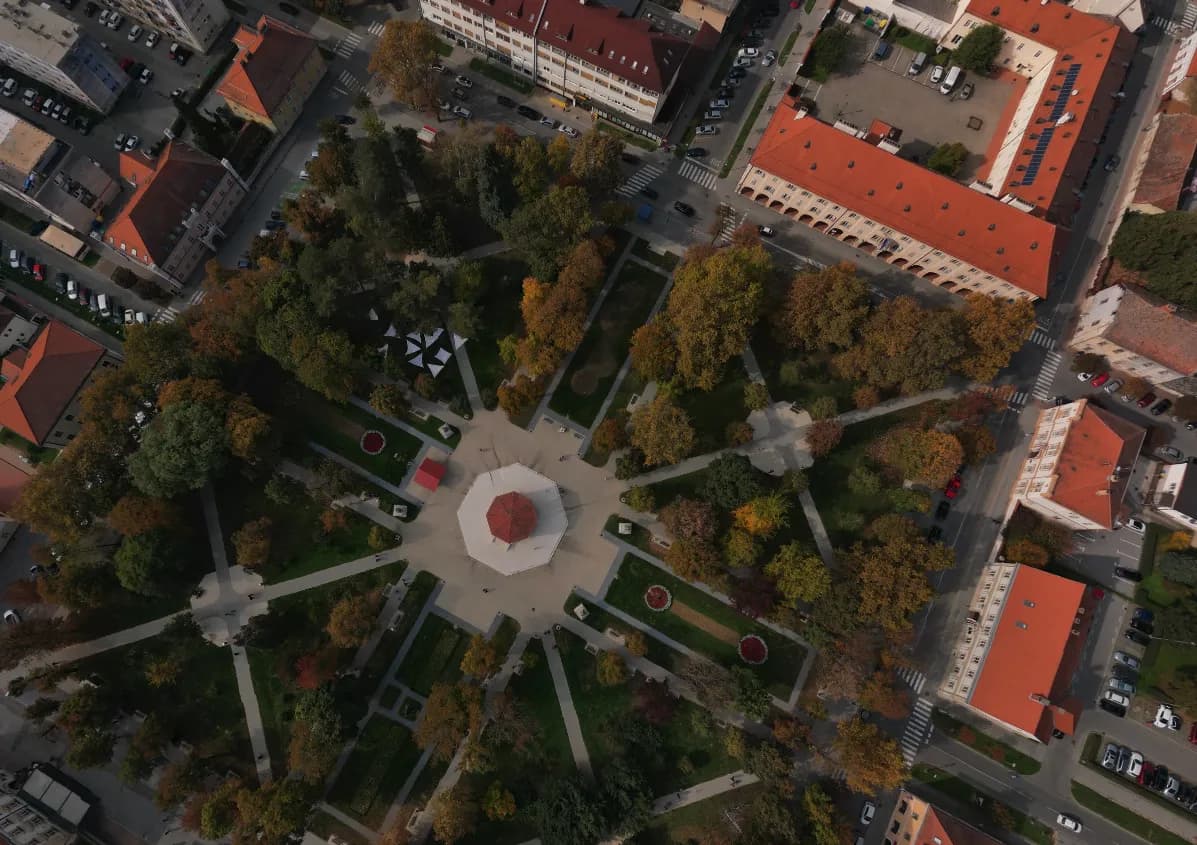
The Green Horseshoe (Lenuzzi's Horseshoe): City engineer Milan Lenuzzi designed a comprehensive urban plan for Lower Town (Donji grad), consisting of a U-shaped ribbon of eight landscaped public squares and parks. This grand boulevard incorporates Nikola Šubić Zrinski Square (Zrinjevac), the palace of the Croatian Academy of Sciences and Arts (HAZU, established in 1866 through Bishop J. J. Strossmayer's endowment), the University Botanical Garden, and the Neo-Baroque Croatian National Theatre (HNK), built in 1895 by Viennese architects Fellner & Helmer and inaugurated by Emperor Franz Joseph I.
Twentieth-Century Zagreb: Conflicts, Ideologies, and Urbanization
Zagreb opened the 20th century with the launch of an electric tram network in 1910 and public electrical grid connections in 1907. Industrial zones expanded along rail corridors, drawing thousands of internal migrants from across Croatia.
World War I and the Kingdom of Serbs, Croats and Slovenes
During World War I (1914–1918), Zagreb avoided direct ground combat, but dealt with chronic supply shortages, influenza outbreaks, and continuous influxes of wounded soldiers from the Balkan and Isonzo fronts.
In October 1918, the National Council of Slovenes, Croats and Serbs convened in Zagreb. On October 29, the Croatian Sabor voted to sever all legal and constitutional ties between the Kingdom of Croatia, Slavonia, and Dalmatia and the Austro-Hungarian Empire, establishing the short-lived State of Slovenes, Croats and Serbs.
Facing external territorial pressure from Italian troops along the Adriatic coast, delegates traveled to Belgrade, where the unified Kingdom of Serbs, Croats and Slovenes (later the Kingdom of Yugoslavia) was proclaimed on December 1, 1918.
Relegated to a regional administrative center subject to centralist governance from Belgrade, Zagreb saw widespread civil dissatisfaction and political opposition organized by the Croatian Peasant Party (HSS) led by Stjepan Radić.
Following the Cvetković–Maček Agreement in 1939, the autonomous Banovina of Croatia was formed, restoring Zagreb as its formal political capital.
World War II and the Anti-Fascist Resistance
Following the Axis invasion of Yugoslavia in April 1941, Ustaše leader Slavko Kvaternik broadcast the proclamation of the Independent State of Croatia (NDH) on April 10 via Zagreb radio. This Axis puppet regime, installed under the sponsorship of Fascist Italy and Nazi Germany, established its government in Zagreb under Ante Pavelić.
State Terror and Persecution: Racial laws were immediately enacted. Thousands of Zagreb Jews, Serbs, Roma, alongside Croatian anti-fascists, trade unionists, and dissidents, were arrested, executed at sites such as Dotrščina and Rakov Potok, or deported to concentration camps including Jasenovac, Jadovno, and Danica.
Underground Resistance: Despite severe surveillance, Zagreb maintained an active urban anti-fascist resistance movement. Resistance groups carried out intelligence collection, distributed illegal publications, and conducted infrastructure sabotage (including the 1941 bombing of the Central Post Office on Jurišićeva Street), while thousands joined Partisan brigades in the surrounding Medvednica and Žumberak hills.
Liberation: On May 8, 1945, units of the Yugoslav Army entered Zagreb, overthrowing the NDH regime. The city became the capital of the People's (later Socialist) Republic of Croatia within the reconstituted federal Yugoslavia.
The Socialist Era: Crossing the Sava and Modernist Growth
Between 1945 and 1990, Zagreb experienced the largest spatial and demographic expansion in its history, moving south beyond its historic limits onto the right bank of the Sava River.
The Urban Vision of Većeslav Holjevac and Novi Zagreb
Under Mayor Većeslav Holjevac (who led the city government from 1952 to 1963), the municipality made the strategic decision to expand southward:
Zagreb Fair (Velesajam): In 1956, the international trade exhibition grounds were moved from Savska Street to expansive grounds south of the Sava, functioning as a global trade nexus between Eastern and Western markets.
Novi Zagreb: Guided by modernist planning principles and the Athens Charter, planned residential districts were developed (including Trnsko, Zapruđe, Siget, Sopot, and Utrina) featuring wide arterial boulevards, public parks, schools, and health centers.
Civic Infrastructure: The Liberty Bridge (Most slobode) and Youth Bridge (Most mladosti) were constructed, alongside the new City Hall, the Vatroslav Lisinski Concert Hall, and the modern complex of the National and University Library (NSK).
In 1971, Zagreb was the center of the Croatian Spring—a widespread reformist political and student movement led by Savka Dabčević-Kučar and Miko Tripalo that advocated for greater economic decentralization and cultural autonomy for Croatia within Yugoslavia, before being suppressed by the central Party apparatus.
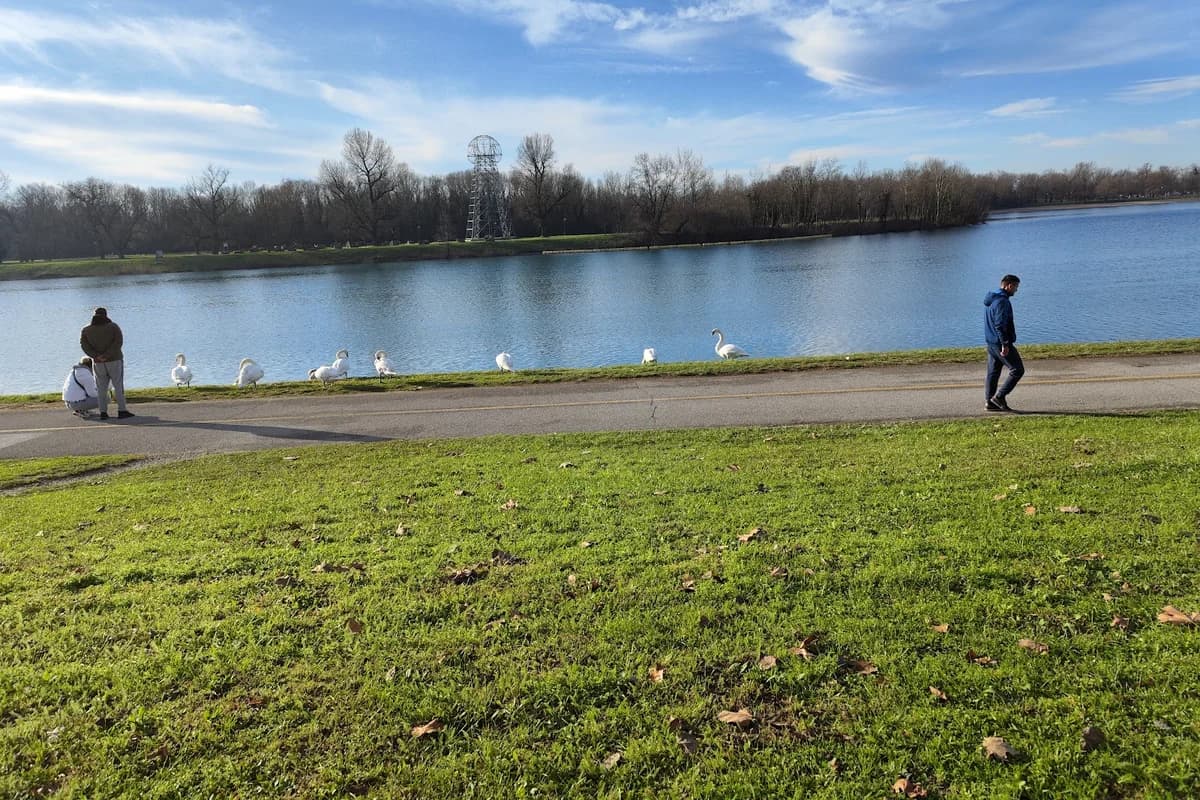
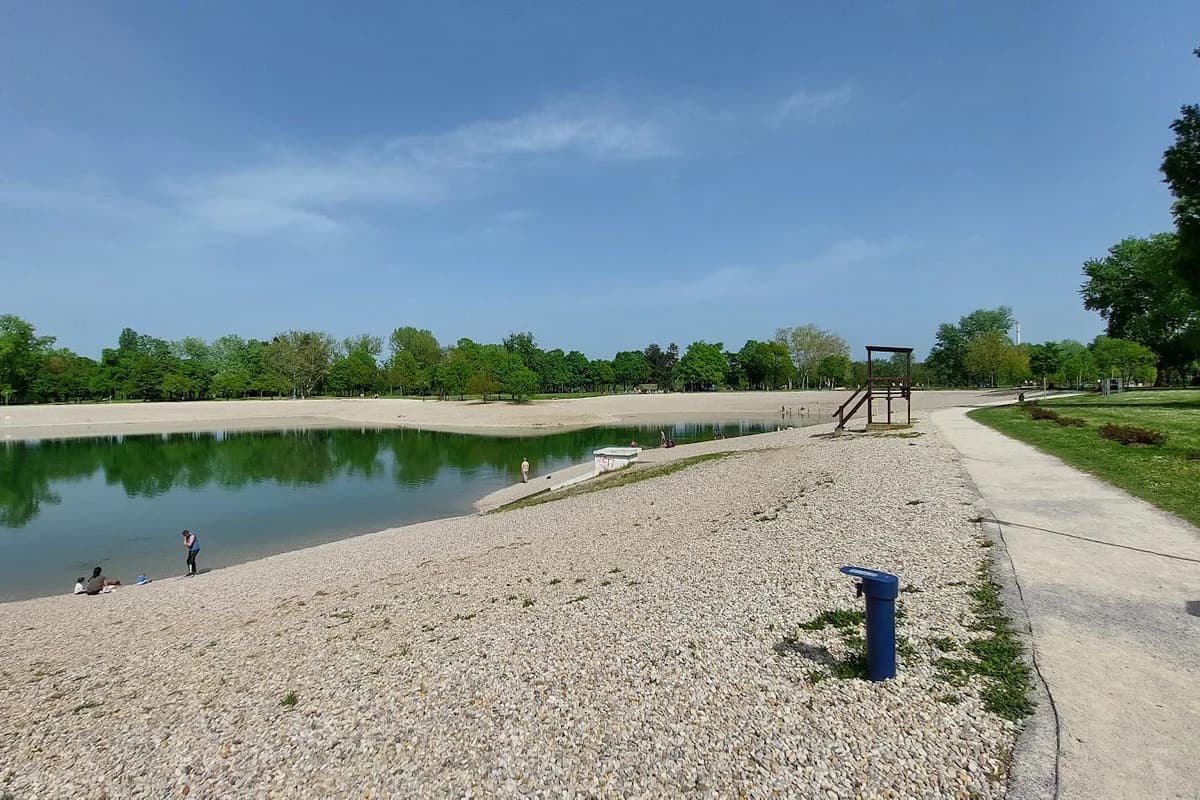
In 1987, Zagreb hosted the 14th Summer Universiade. Hosting the international university athletic games prompted the restoration of the historic center and the construction of new sports complexes, including the Jarun Lake recreation center, the Mladost swimming stadium, and the Cibona business tower with the Dražen Petrović Basketball Hall.
Contemporary Zagreb: The Homeland War and European Integration
With the establishment of multi-party democracy in 1990 and the dissolution of Yugoslavia, Zagreb assumed its role as the capital of a sovereign, independent republic.
The Homeland War and Independence (1991–1995)
May 30, 1990: The first democratically elected multi-party Croatian Parliament convened on St. Mark's Square.
June 25 and October 8, 1991: Parliament adopted the Constitutional Decision on the Sovereignty and Independence of the Republic of Croatia. Following the expiration of a three-month international moratorium and the airstrike on Banski Dvori, on October 8, 1991, Parliament formally severed all legal connections with the SFRY during an emergency session convened in the INA building basement on Šubićeva Street.
The Bombing of Banski Dvori: On October 7, 1991, Yugoslav Air Force jets carried out a targeted missile strike against the presidential offices in Banski Dvori, aiming to assassinate President Franjo Tuđman, Stjepan Mesić, and Ante Marković.
Rocket Attacks on Zagreb (May 1995): Retaliating for the Croatian military operation Flash (Bljesak), rebel Serb forces launched Orkan surface-to-surface cluster rockets directly into central Zagreb on May 2 and 3, 1995. The warheads hit civilian areas including Children's Hospital Zagreb on Klaićeva Street, the Croatian National Theatre, the Academy of Dramatic Art, and Vlaška Street, killing seven civilians and wounding over two hundred.
Zagreb in the 21st Century: Modern Challenges, the 2020 Earthquake, and European Capital
Following the war, Zagreb consolidated its status as the commercial, political, administrative, and academic hub of Croatia. With Croatia's accession to the European Union in 2013, Zagreb joined the ranks of the 27 EU capital cities.
On the morning of March 22, 2020, at 6:24 AM, a magnitude 5.5 earthquake hit Zagreb, centered in the northern suburb of Markuševec. Striking during the initial lockdowns of the COVID-19 pandemic, the earthquake caused substantial structural damage across the historic city core, residential quarters, hospitals, university facilities, and sacred architecture, including the spires of Zagreb Cathedral.
The subsequent comprehensive reconstruction initiative represents the largest structural and conservation effort in the city's modern history, combining seismic strengthening, historical restoration, and energy efficiency upgrades.
Chronological Overview of Key Historical Milestones in Zagreb
Year | Event and Historical Significance |
|---|---|
1094 | King Ladislaus I of Hungary establishes the Diocese of Zagreb on Kaptol; Czech cleric Duh is appointed first bishop. |
1217 | The early Romanesque-Gothic Cathedral of Saint Stephen on Kaptol is completed and consecrated. |
1242 | King Béla IV issues the Golden Bull; Gradec is granted Free Royal City status and begins constructing stone fortifications. |
1266 | Perimeter defensive fortifications around Gradec are completed, including Lotrščak Tower, Popov Toranj, and Stone Gate. |
1478 | In response to Ottoman incursions, Kaptol finishes construction of Renaissance stone walls and defensive round towers. |
1557 | Zagreb is first documented in parliamentary records as the capital (metropolis) of the Kingdom of Croatia. |
1607 | The Jesuit order establishes the Classical Gymnasium on Gradec, launching institutional secondary education. |
1669 | Emperor Leopold I recognizes the Jesuit Academy's university status, marking the formal origin of the University of Zagreb. |
1776 | After a major fire in Varaždin, the Croatian Royal Council permanently relocates to Zagreb, confirming it as the capital. |
1847 | The Croatian Parliament, meeting in Zagreb, passes legislation making Croatian the official language of administration. |
1850 | Imperial patent of September 7 unifies Gradec, Kaptol, Nova Ves, and Vlaška into the unified City of Zagreb. |
1852 | The Diocese of Zagreb is elevated to an Archdiocese; Juraj Haulik is appointed its first archbishop and cardinal. |
1880 | The Great Zagreb Earthquake (magnitude 6.3) causes widespread damage, triggering modern historicist urban reconstruction. |
1891 | The horse-drawn tram system begins operations; the historic Upper Town funicular opens one year earlier. |
1895 | Emperor Franz Joseph I inaugurates the new Neo-Baroque Croatian National Theatre (HNK) building. |
1918 | The Croatian Sabor dissolves ties with Austria-Hungary; the city briefly enters the State of SHS before joining the Kingdom of SHS. |
1941–1945 | World War II era: Zagreb serves as the capital of the Axis puppet NDH; sees underground resistance until liberation on May 8, 1945. |
1956 | Mayor Većeslav Holjevac moves the Zagreb Fair south across the Sava River, initiating the planned development of Novi Zagreb. |
1987 | Zagreb hosts the 14th Summer Universiade, prompting extensive public renovations and sports infrastructure construction (Jarun, Cibona). |
1991 | Parliament proclaims a sovereign, independent Republic of Croatia; Yugoslav Air Force jets bomb presidential offices at Banski Dvori. |
1995 | Rebel Serb forces strike central Zagreb with cluster rockets during Operation Flash, resulting in civilian casualties. |
2013 | Croatia joins the European Union, making Zagreb an official capital of the European Union. |
2020 | A magnitude 5.5 earthquake strikes Zagreb on March 22, inflicting severe damage across the historic city center and Lower Town. |
Primary Historical Archives and Research References
Zagreb City Museum (MGZ) – Central museum documenting the archaeological, cultural, social, and political history of the city.
State Archives in Zagreb (DAZG) – Repository preserving foundational public records, royal charters, guild documents, and civic registers.
Miroslav Krleža Institute of Lexicography – Croatian Encyclopedia: Zagreb – Academic synthesis of urban development, demographics, and regional history.
Official Portal of the City of Zagreb – History – Municipal documentation regarding historical development, statutes, and civic structures.
Institute of Art History – Academic research on Lower Town historicist urbanism, Herman Bollé's restorations, and the Green Horseshoe.