

Throughout its multi-millennial history, Dubrovnik (Lat. Ragusa) represented a unique geopolitical phenomenon on the eastern coast of the Adriatic. As an exceptionally rich commercial, maritime, and diplomatic center, the city constantly attracted the gazes of its powerful neighbors. Dubrovnik's hinterland, dominated by various state entities—from medieval Rascia (Serbia) and Bosnia to the Ottoman Empire—was an area with which the city maintained complex relations. These relations were mostly based on highly profitable trade, but on several occasions, they escalated into open military conflicts.
When discussing the history of conflicts with the medieval Serbian state and later modern Serbia, historiography precisely records 7 major attempts to subjugate, attack, or besiege the territory of Dubrovnik.
However, it is necessary to highlight one crucial, fundamental difference that separates the first six medieval conflicts from the seventh, modern one. The medieval attacks by Serbian rulers (župans, kings, and regional lords) were never aimed at the physical destruction of Dubrovnik, the erasure of its identity, or genocide against its population. In the Middle Ages, wars were fought exclusively over trade privileges, control of customs, the monopoly on the salt trade, or the collection of tribute. Medieval rulers needed wealthy Dubrovnik as an economic partner and a window to the world; weapons were drawn to force the city into financial concessions or to acknowledge political suzerainty.
On the other hand, the idea of total conquest, annexation, destruction of cultural identity, and the incorporation of Dubrovnik into a foreign state territory is exclusively a product of the 20th century, specifically the Greater Serbian ideology of the 1990s. That attempt during the Homeland War completely breaks away from the historical framework because its goal was not an economic compromise, but territorial conquest and the eradication of the Croatian presence in southern Dalmatia.
Below is a detailed and documented overview of all 7 key historical assaults on the freedom of Dubrovnik originating from that region.
1. The Siege Led by Stefan Nemanja and Prince Miroslav (1184 – 1186)
The first major recorded military strike against Dubrovnik from the direction of Rascia occurred at the end of the 12th century, during the rise of the Nemanjić dynasty. Grand Župan Stefan Nemanja managed to unite the Serbian tribes and expand his rule toward the Adriatic coast, specifically the areas of Doclea and Travunia (the modern-day hinterland of Dubrovnik and Montenegro). His brother Miroslav ruled neighboring Zachlumia. Their goal was to seize control of Dubrovnik's maritime potential and its port.
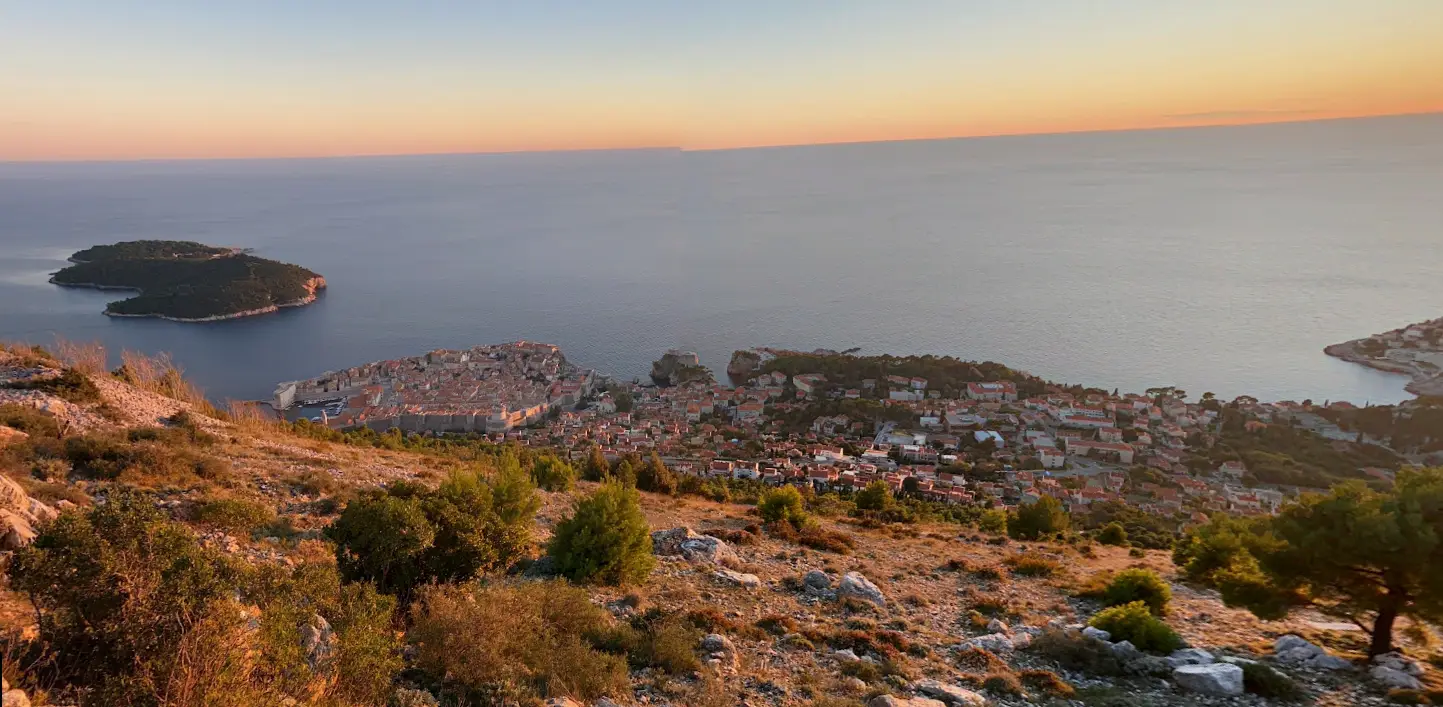
Course of the Conflict: The war began in 1184 at sea. Prince Miroslav gathered a strong fleet and attempted a naval blockade and capture of the city. However, even then, the people of Dubrovnik possessed a highly skilled and equipped navy. In a naval battle near the islet of Lokrum, Dubrovnik's galleys completely shattered Miroslav's fleet, inflicting a heavy defeat. A year later, in 1185, a land assault followed. Grand Župan Stefan Nemanja himself, together with his brother Stracimir, brought a strong land army to the walls of Dubrovnik. An exhausting siege began, but the mighty fortifications of Dubrovnik, coupled with good maritime logistics, proved to be an insurmountable obstacle for the Serbian army, which lacked advanced siege engines.
Resolution: Realizing that the city could not be taken by force, Stefan Nemanja agreed to sign a peace treaty on September 27, 1186. This document, issued in the form of a charter, is exceptionally important because in it Nemanja guaranteed Dubrovnik's merchants freedom of movement and trade throughout his state, proving that economic pragmatism prevailed over military ambitions.
2. First War with King Stefan Uroš I (1252 – 1253)
In the mid-13th century, Dubrovnik's trade in the Balkan interior flourished, especially due to the development of mining in Serbia (such as the Brskovo mine). However, economic growth also brought political tensions. Serbian King Stefan Uroš I, aware of his economy's dependence on Dubrovnik's mediation, wanted to reduce Dubrovnik's monopoly, increase customs duties, and force the city to recognize his jurisdiction over the Archbishopric of Dubrovnik.
Course of the Conflict: Uroš I initiated hostilities in late 1252 by closing borders, seizing Dubrovnik's goods in Serbia, and launching direct military incursions into the Župa of Dubrovnik. To avoid relying solely on their walls, the Dubrovnik Senate pulled off a brilliant diplomatic move—they forged a defensive and offensive military alliance with the powerful Bulgarian Empire, then ruled by Tsar Michael Asen.
Resolution: When the Bulgarian army, according to the agreement with Dubrovnik, penetrated deep into Serbian territory from the east, King Uroš I found himself in a hopeless situation. The army besieging Dubrovnik had to withdraw to defend the center of the state. In August 1254, a peace treaty was signed in which Uroš I not only had to abandon all his demands but also had to pay war reparations to Dubrovnik, and the city was confirmed all its old trade privileges.
3. Second War with King Stefan Uroš I (1265 – 1268)
Despite the peace of 1254, relations remained strained. The Republic of Ragusa had a tradition of granting political asylum (sanctuary) to defeated nobles and political opponents from neighboring countries, which the Serbian court considered a direct provocation. Furthermore, constant disputes over the amount of customs duties for the export of silver and lead once again led to an escalation.
Course of the Conflict: In 1265, Uroš I mobilized his army again. This war was longer and more exhausting. The Serbian army could not breach the walls, but for years they ravaged the Dubrovnik coastline, destroying vineyards and olive groves, which created immense economic pressure on the city. The people of Dubrovnik once again employed diplomacy, but this time the Venetian Republic (under whose formal suzerainty Dubrovnik was at the time) mediated the negotiations.
Resolution: The war ended in 1268 with an agreement that laid the foundations for a longer-lasting peace, albeit with a financial concession from Dubrovnik. The so-called St. Demetrius Tribute (Svetodmitarski dohodak) was introduced—an obligation for Dubrovnik to pay the Serbian ruler 2,000 perpers (silver coins) every year on the feast day of Saint Demetrius. The people of Dubrovnik regularly paid this "tribute for peace and free trade" for centuries (later paying it to Bosnian rulers as well), realizing that it was more profitable to buy peace and continue trading than to wage exhausting wars.
4. Trade War with King Milutin (1301 – 1302)
The early 14th century brought a realignment of powers in the Mediterranean. A war broke out between the Venetian Republic and Byzantium. Serbian King Stefan Uroš II Milutin sided with Byzantium, while Dubrovnik, as a Venetian subject, was forced to take the opposing side. The conflict also took on a local dimension because the neighboring city of Kotor, which was then under Serbian rule, saw an opportunity to usurp Dubrovnik's commercial primacy.
Course of the Conflict: King Milutin closed all mines and trade routes to Dubrovnik's merchants and ordered the people of Kotor to launch a naval war against Dubrovnik. Although the Serbian army threatened the land borders, the bulk of the war was fought at sea. Dubrovnik's war fleet, significantly more experienced than Kotor's, managed to completely blockade Kotor and prevent any serious naval strike on Dubrovnik itself.
Resolution: Realizing that the blockade was harming both sides and that a military victory was impossible without a strong navy, King Milutin agreed to negotiations. With Venetian mediation, peace was signed in 1302, the people of Kotor had to cease their attacks, and Dubrovnik's merchants returned to the Serbian mining basins.
5. The Ston War Against Župan Vojislav Vojinović (1359 – 1362)
After the death of the mighty Tsar Dušan in 1355, the Serbian Empire began to fracture. Instead of a strong central authority, aggressive regional lords stepped onto the scene. The most powerful among them on the border with Dubrovnik was Župan (Count) Vojislav Vojinović. The cause of the conflict was the Pelješac peninsula and the town of Ston. In 1333, Dubrovnik had purchased Pelješac from Serbian King Dušan and Bosnian Ban Stephen II Kotromanić to secure the incredibly important salt pans of Ston. Growing stronger, Vojinović decided to take back this territory by force.
Course of the Conflict: Vojinović launched terrible attacks on Konavle, the Župa of Dubrovnik, and the surroundings of Ston. He drove away cattle, burned summer residences, and captured peasants. The Dubrovnik Council strictly forbade its soldiers from leaving the walls of Ston and Dubrovnik to engage in open battle with Vojinović's heavy cavalry. Instead, they locked themselves in the city, blocked the import of salt into Vojinović's region, and activated their diplomacy.
Resolution: In 1358, Dubrovnik had recognized the suzerainty of the Croatian-Hungarian King Louis I of Anjou. Dubrovnik's emissaries went to the court in Buda and convinced Louis I to exert pressure on the Serbian Tsar Uroš the Weak. Pressured by the threat of a large Hungarian army, Vojinović signed a peace treaty in Onogošt (modern-day Nikšić) in 1362, recognizing Dubrovnik's borders on Pelješac and compensating for the damages.
6. The War of Annihilation with Nikola Altomanović (1370 – 1373)
When Vojislav Vojinović suddenly died, his estates were taken over by his young and extremely brutal nephew—Župan Nikola Altomanović. He represented one of the most dangerous individual challenges to Dubrovnik's diplomacy in the Middle Ages. Altomanović did not just seek trade concessions; he demanded that Dubrovnik pay him the St. Demetrius Tribute (which belonged to the Tsar) and demanded absolute submission, threatening the total destruction of Dubrovnik's trade.
Course of the Conflict: In 1370, Altomanović's detachments invaded Dubrovnik's soil. Konavle and the Župa burned once again. Altomanović banned the export of grain to Dubrovnik, trying to starve the city, and began plotting to capture the city itself. Realizing that things had gone too far and that this tyrant could not be negotiated with, the Dubrovnik Senate pulled a historic move—it orchestrated his destruction.
Resolution: Dubrovnik's diplomats managed to convince the two most powerful rulers in the neighborhood, Bosnian Ban (later King) Tvrtko I Kotromanić and Serbian Prince Lazar Hrebeljanović, that Altomanović was a threat to everyone. With financial and logistical support from Dubrovnik and the political blessing of the Hungarian king, Tvrtko and Lazar launched a joint attack on Altomanović in 1373. They quickly defeated him militarily, captured him in the Užice fortress, and blinded him. His territory was divided, and Dubrovnik once again secured long-term peace and confirmed its independence.
7. Great Serbian Aggression and the Siege of Dubrovnik (1991 – 1992)
Following the collapse of the medieval states, the arrival of the Ottomans, the fall of the Republic in 1808, and the formation of Yugoslavia in the 20th century, there was a period of over 500 years in which Dubrovnik was not directly attacked by its eastern neighbors with the aim of changing borders. But this changed drastically with the breakup of SFR Yugoslavia.
This seventh attempt at conquest was of an entirely different nature. In the autumn of 1991, the armed forces of the Yugoslav People's Army (JNA), transformed into a tool for executing Slobodan Milošević's Great Serbian ideology, supported by reservists from Montenegro and territorial defense units from eastern Herzegovina, launched a general military assault on Dubrovnik and the entire south of Croatia.
Ideological Background – The Difference from Historical Attacks: As emphasized in the introduction, the military aggression of 1991 had nothing to do with trade customs or tribute. It was the product of the SANU Memorandum and the "Greater Serbia" project. The goal was to physically detach the Dubrovnik area from the Republic of Croatia, establish a so-called "Dubrovnik Republic" as a puppet state (which would later be annexed to Greater Serbia), expel the majority Croatian population, and erase the Croatian cultural and national identity of the city. This was a war for territory and demographics, a war of annihilation—a concept that was completely foreign and unimaginable to medieval rulers.
Course of the Conflict and Siege: The attack began on October 1, 1991, from three directions: the Montenegrin coast, the Herzegovinian hinterland, and from the sea. Over 10,000 heavily armed aggressor soldiers, supported by tanks, aviation, and warships, advanced on a city defended by only a few hundred lightly armed Croatian defenders and police officers. The aggressor quickly occupied Konavle, the Župa of Dubrovnik, and the Dubrovnik Littoral, burning and looting everything in their path.
The city found itself entirely encircled. The JNA cut off the supply of electricity, drinking water, and telecommunications. For months, residents lived in shelters, while hundreds of artillery shells fell on the city daily. The most brutal and devastating attack occurred on December 6, 1991, when the JNA directly targeted the UNESCO-protected historic core. On that day, centuries-old palaces (such as the Festival Palace), monasteries, and libraries burned, and shells rained down on the Stradun. In the city itself, 19 civilians and defenders were killed that day. The goal was to break morale by targeting what was most sacred—cultural monuments.
Liberation and the Final Collapse of the Aggression: Thanks to the superhuman efforts of the defenders (who held the strategic point, Fort Imperial on Mount Srđ above the city) and the logistical support provided by the Armed Ships Detachment (which broke the naval blockade with fast speedboats to bring food, weapons, and medicine), Dubrovnik did not fall.
Images of the burning old town went around the world and shocked the international public, playing a key role in the swift international recognition of the independence of the Republic of Croatia. In the spring of 1992, the Croatian Army launched an offensive (Operations "Jackal", "Tiger", and finally the operation to liberate Konavle at the end of the year). Through these operations, the aggressor forces were completely shattered, the city was unblocked, and the enemy was permanently pushed back behind the internationally recognized borders of the Republic of Croatia.
Epilogue of Historical Trials
When analyzing the centuries-long history of relations between Dubrovnik and its eastern hinterland today, a clear red thread of survival is visible. Each of these seven attempts represented a test of Dubrovnik's endurance, intelligence, and vision.
The first six wars from the Middle Ages, although destructive, always ended at the negotiating table. The wise aristocratic diplomacy of the Republic of Ragusa perfectly understood that the rulers in the hinterland did not need a burned city, but rather its commercial skills and access to the global seas. The people of Dubrovnik bought peace by paying tribute, making concessions, or forming complex alliances (with the Bulgarians, Hungarians, and Bosnians), always ensuring that the institution of their state and territorial integrity remained intact.
However, the final attempt at the end of the 20th century showed that irrational ideology aimed at ethnic cleansing and the erasure of identity cannot be countered with traditional diplomacy and money, but exclusively with weapons and resolve. Proving that the spirit of the Republic lives on even after its formal fall in 1808, the modern defenders of Dubrovnik managed to do what their ancestors had done for centuries—preserve the freedom that "is not sold for all the gold in the world." All seven assaults on the city ended in the same way: the walls remained standing, and Dubrovnik continued to live as a free city.
Written by
CroatiaBest
Explore Dubrovnik
Dubrovnik, also known as the Pearl of the Adriatic, is one of the most beautiful historic cities in the Mediterranean and a UNESCO World Heritage site. Its impressive city walls guard the centuries-ol...
You might also be interested in

Croatia Worth Visiting: Historical, Natural, and Social Wonders of Europe’s Top Destination
When mentioning a country that combines a thousand-year history, incredible natural diversity, and a unique social lifestyle within a relatively small geographic space, Croatia rightfully stands at the very top of world tourism and transit maps. Located at the crossroads of Central Europe, the Mediterranean, and Southeast Europe, this country has been built over centuries as a bridge between different civilizations, cultures, and trade routes. Whether you are a passionate explorer of ancient ruins, a lover of untouched nature, a foodie in search of authentic flavors, or a traveler wanting to feel the relaxed Mediterranean spirit, Croatia offers an experience that goes beyond conventional tourism.

Croatia is Still the Best Choice in Europe
In recent seasons, the same almost template-like debate has resurfaced in the public space, on travel forums, and across regional media: Has Croatia become too expensive, are we "overpriced," and will budget-friendly destinations in the Mediterranean and neighboring regions completely replace us? Media headlines compete in displaying receipts from Adriatic terraces, highlighting isolated examples of high prices for coffee, pizza, ice cream, or beach loungers in exclusive locations, building a narrative that vacationing on the Croatian coast has become a luxury affordable only to the wealthiest.
Subscribe
The best stories about Croatia straight to your inbox every Sunday.