

"When mentioning a country that combines a thousand-year history, incredible natural diversity, and a unique social lifestyle within a relatively small geographic space, Croatia rightfully stands at the very top of world tourism and transit maps. Located at the crossroads of Central Europe, the Mediterranean, and Southeast Europe, this country has been built over centuries as a bridge between different civilizations, cultures, and trade routes. Whether you are a passionate explorer of ancient ruins, a lover of untouched nature, a foodie in search of authentic flavors, or a traveler wanting to feel the relaxed Mediterranean spirit, Croatia offers an experience that goes beyond conventional tourism."
When mentioning a country that combines a thousand-year history, incredible natural diversity, and a unique social lifestyle within a relatively small geographic space, Croatia rightfully stands at the very top of world tourism and transit maps. Located at the crossroads of Central Europe, the Mediterranean, and Southeast Europe, this country has been built over centuries as a bridge between different civilizations, cultures, and trade routes. Whether you are a passionate explorer of ancient ruins, a lover of untouched nature, a foodie in search of authentic flavors, or a traveler wanting to feel the relaxed Mediterranean spirit, Croatia offers an experience that goes beyond conventional tourism. Below is a detailed look into all the elements that make Croatia a dream destination—from its historical foundations and natural phenomena to its social fabric and key statistical indicators that confirm its uniqueness.
Historical Highlights: A Thousand-Year Heritage at the Crossroads of Civilizations
Croatia's history is rich, multilayered, and turbulent. Every historical era has left an indelible mark on its architecture, urban planning, language, and customs. Due to its strategic location on the Adriatic Sea, Croatian lands have always been attractive to great empires—from the Romans and Byzantines, through the Republic of Venice and the Habsburg Monarchy, to the Ottoman Empire, which reached its borders.
Prehistory and Antiquity
Traces of human life in present-day Croatia go deep into the distant past. One of the world's most important paleontological sites is located in Krapina, where the remains of the Krapina Neanderthal (Homo neanderthalensis) were discovered, estimated to be around 130,000 years old. Today, this site is home to the modern, award-winning Krapina Neanderthal Museum. With the arrival of the Illyrians and Greeks, followed by the establishment of Roman rule, an era of intense urbanization began. The Romans left behind architectural wonders that still stand in their full glory today:
Pula Arena: One of the six largest and best-preserved Roman amphitheaters in the world, built in the 1st century. This ancient gladiator arena now serves as an impressive stage for concerts and film festivals.
Diocletian's Palace in Split: Built at the end of the 3rd and beginning of the 4th century by order of Roman Emperor Diocletian. This palace is not a typical monument or open-air museum—it is the living core of the city of Split, where people still live, restaurants operate, and daily life unfolds within its walls.
Salona: The former capital of the Roman province of Dalmatia, whose ruins near Solin testify to the size and power of the ancient era.
Middle Ages, Renaissance, and the Republic of Dubrovnik
In the Early Middle Ages, the Croatian state took shape under native rulers. Numerous Early Croatian monuments and churches date back to this period, such as the Church of the Holy Cross in Nin—known as "the smallest cathedral in the world." A special chapter in history belongs to literacy; Croatia is unique for its use of Glagolitic, an Old Slavic script used here for centuries, as evidenced by the Baška Tablet from 1100, found on the island of Krk. A special place in world history belongs to the Republic of Dubrovnik (Respublica Ragusina). This maritime and merchant city-state was a phenomenon of its time:
It maintained its independence through diplomatic skill.
It abolished slavery back in 1416 (centuries ahead of many European powers).
It built the impressive Walls of Dubrovnik, which are today protected by UNESCO and attract millions of visitors.
The Renaissance and Baroque periods left an indelible mark on coastal and inland cities alike. The Cathedral of St. James in Šibenik, built entirely of stone without the use of mortar, represents an architectural masterpiece blending Gothic and Renaissance styles.
UNESCO World Heritage Sites
Croatia boasts an exceptional density of cultural property inscribed on the UNESCO World Heritage list. Notable among them are:
Historical Complex of Split with the Palace of Diocletian
Old City of Dubrovnik
Historic City of Trogir
Episcopal Complex of the Euphrasian Basilica in the Historic Centre of Poreč (famous for its early Christian mosaics)
The Cathedral of St. James in Šibenik
Stari Grad Plain on the island of Hvar (preserved ancient Greek land parceling)
Venetian Works of Defence between the 15th and 17th Centuries (Zadar and Šibenik)
Stećci Medieval Tombstone Graveyards
Geographical and Natural Features: Where Mountains, Sea, and Plains Meet
One of the most fascinating aspects of Croatia is its geographical diversity. Few countries in Europe offer a combination of Pannonian plains, forested mountains, karst relief landscapes, and a spectacular marine archipelago within such short distances.
Geographic Location and Relief Regions
Geographically and climatically, Croatia is divided into three main regions:
Lowland (Continental) Croatia: Encompasses the regions of Slavonia, Baranja, Srijem, Podravina, Posavina, Međimurje, and Central Croatia. This region is characterized by fertile plains, major rivers (Danube, Sava, Drava, Mura), rolling hills like Zagorje, and pedunculate oak forests. This is the agricultural and winemaking heart of the country.
Mountainous Croatia: Encompasses Lika and Gorski Kotar. This region serves as a natural bridge between the continental and Mediterranean parts. It is dominated by high mountains (Velebit, Dinara, Risnjak), dense coniferous and deciduous forests, clear subterranean rivers, and karst fields. Dinara is also home to Croatia's highest peak—Sinjal (5,981 ft / 1,831 m).
Coastal Croatia: Encompasses Istria, the Croatian Littoral, and Dalmatia. The main characteristics of this area are a highly indented coastline, karst terrain, and a pleasant Mediterranean climate.
Jewels of Nature: National Parks and Nature Parks
About 10% of Croatia's total land area falls under some form of legal nature protection. This natural paradise includes 8 national parks and 12 nature parks.
National Parks:
Plitvice Lakes: The oldest (established in 1949) and most famous national park in Croatia, also listed as a UNESCO World Natural Heritage site. It consists of 16 terraced lakes connected by magnificent waterfalls and tufa barriers surrounded by dense forests.
Krka: Famous for its tufa waterfalls (Skradinski Buk, Roški Slap), Visovac Island with its monastery, and rich flora and fauna.
Kornati: An archipelago of 89 islands, islets, and reefs of exceptional beauty. A true haven for sailors due to its rugged, barren beauty and crystal-clear waters.
Brijuni: Islands off the coast of Istria that combine natural beauty with rich history, a safari park, and monuments from ancient and modern times.
Paklenica: Located on southern Velebit, known for the magnificent canyons of Velika and Mala Paklenica. A world-renowned destination for rock climbers and hikers.
Risnjak: A mountain range in Gorski Kotar, home to three large European predators—the wolf, the lynx, and the brown bear.
Northern Velebit: An area of untouched nature, karst formations (Hajdučki and Rožanski Kukovi), and the famous Premužić’s Trail, which offers spectacular views of the Adriatic Sea.
Mljet: The greenest Croatian island, located in southern Dalmatia, famous for its two saltwater lakes and a Benedictine monastery on the islet of St. Mary.
The Adriatic Sea and Coastal Indentation
The Adriatic Sea in Croatia is known as one of the cleanest and clearest in Europe. The coast is highly indented with more than 1,200 islands, islets, and reefs, of which only about 50 are permanently inhabited. The largest islands are Krk and Cres, while tourist favorites include Hvar (the sunniest island), Brač (famous for Zlatni Rat beach and its unique limestone), Korčula (reputed birthplace of Marco Polo), and Vis.
Social and Cultural Features: Mindset, Traditions, and Lifestyle
While history and nature are key assets, what keeps visitors coming back to Croatia is its people, their lifestyle, and rich social heritage. Croatian social identity is a unique blend of Southern Mediterranean relaxed attitude and Central European precision and work ethic.
"Coffee Culture" and the Mediterranean Pace of Life
Morning or afternoon coffee in Croatia is not just about drinking a beverage—it is a social ritual. Sitting on sunlit café patios for hours, chatting with friends, family, or business partners is a core part of everyday life. In the coastal parts of Croatia, you will often hear terms like:
Fjaka: A specific mind-and-body state where a person simply wants to do nothing—a state of mental calm and slow living, especially pronounced during the summer heat.
Polako (Slowly): A philosophy of life where unnecessary stress and rush have no place.
Gastronomy and Winemaking: Fusion of Continent and Sea
Croatian cuisine is highly diverse and changes depending on the region. It can be divided into two main categories:
Mediterranean Cuisine (Istria, Coast, Dalmatia) Based on olive oil, fresh fish, seafood, vegetables, aromatic herbs (rosemary, sage, bay leaf), and light cooking techniques.
Specialties: Dalmatian pašticada with gnocchi, black risotto (cuttlefish ink), grilled fish, octopus baked under the bell (peka), Istrian fuži pasta with truffles, prosciutto, and Pag island cheese (Paški sir).
Continental Cuisine (Slavonia, Zagorje, Central Croatia) Based on richer meat dishes, freshwater fish, root vegetables, and dairy products.
Specialties: Slavonian meat stew (čobanac), fish stew (fiš-paprikaš), štrukli (baked or boiled cheese pastry from Zagorje), roasted pork and lamb, kulen sausage, and roasted turkey with mlinci pasta.
Winemaking and Olive Oil Production Croatia has a thousand-year tradition of producing wine and olive oil. Istrian and Dalmatian extra virgin olive oils regularly win top global quality awards. When it comes to wine, Croatia offers priceless indigenous grape varieties:
White wines: Graševina (inland), Malvazija Istarska (Istria), Pošip and Vugava (Dalmatia), Žlahtina (Krk).
Red wines: Plavac Mali (Dalmatia), Teran (Istria), Babić, Frankovka.
Traditional Heritage and Intangible Cultural Assets
In addition to tangible monuments, Croatia is rich in intangible cultural heritage recognized by UNESCO. Some of the most interesting cultural phenomena include:
Sinjska Alka: A chivalric tournament held in Sinj since 1715 to commemorate the victory over the Ottoman Empire.
Annual Bell Ringers' Pageant from the Kastav Area: A carnival custom featuring sheepskin attire and large bells used to drive away the evil spirits of winter.
Klapa Singing: Traditional Dalmatian multipart a cappella singing without instrumental accompaniment.
Procession Za Križen ("Following the Cross") on Hvar: A centuries-old religious and community rite taking place on Maundy Thursday.
Gingerbread Craft: The traditional craft of making decorative honey-dough pastries, a iconic symbol of continental Croatia (often shaped as a Licitar heart).
Key Statistics and Facts About Croatia
To provide precise context on why Croatia is one of Europe's most intriguing countries, here is an overview of key statistical, geographical, and demographic indicators:
Basic Geographical and Demographic Data
Land Area: 21,851 sq mi (56,594 km²)
Coastal Sea Area: Approx. 11,995 sq mi (31,067 km²)
Land Boundary Length: 1,476 miles (2,375 km)
Coastline Length: Total 3,900 miles / 6,278 km (of which 2,732 miles / 4,398 km belong to island coastlines, islets, and reefs).
Number of Islands, Islets, and Reefs: 1,244 (of which 48 are permanently inhabited).
Largest Islands: Krk (156.67 sq mi / 405.78 km²) and Cres (156.67 sq mi / 405.78 km²).
Highest Mountain Peak: Dinara / Sinjal (5,981 feet / 1,831 meters above sea level).
Capital City: Zagreb (approx. 770,000 residents in the city proper, over 1 million in the metro area).
Tourism and Environmental Statistics
Protected Nature Areas: Over 9% of Croatia's land territory is part of national parks, nature parks, and strict reserves.
Natura 2000 Network: Around 36% of the land area and 16% of the sea area in Croatia are part of the European Natura 2000 ecological network, placing Croatia near the top of the European Union.
Sunlight Hours: The island of Hvar averages over 2,700 hours of sunshine per year, making it one of the sunniest spots in Europe.
Bathing Water Quality: According to official reports by the European Environment Agency (EEA), Croatia consistently ranks among the top three countries in Europe for coastal water cleanliness and quality (over 95% of sites rated as "excellent").
Tourist Volume: Croatia hosts more than 20 million foreign and domestic tourists annually, accounting for over 100 million overnight stays. Tourism is a key economic driver, contributing around 20% to the country's GDP.
Global Innovations and Contributions to the World
In size and population, Croatia is a small country, but its impact on global science, culture, and technology is significant. Throughout history and into the present, visionaries whose inventions changed the world came from Croatia:
Nikola Tesla: One of the greatest inventors in human history, born in Smiljan near Gospić. His patents and work on alternating current (AC), radio technology, and electric motors formed the foundation of the modern technological era.
Slavoljub Penkala: Inventor of the mechanical pencil (the penkala) and solid-ink fountain pen, as well as the first Croatian aircraft.
Faust Vrančić: Polymath and inventor who published a design and description of the first functional parachute (Homo Volans) in his book Machinae Novae (1615).
Ivan Vučetić (Juan Vucetich): Criminologist born on Hvar who perfected and practically applied dactyloscopy—the method of fingerprint identification that revolutionized modern forensic investigation.
The Necktie (Cravat): Originally a Croatian fashion statement. Croatian soldiers in the 17th century wore distinct neckerchiefs that captivated Parisians and King Louis XIV of France, spreading worldwide under the name cravate.
Rimac Automobili: A modern example of Croatian innovation. Based near Zagreb, the company developed the fastest electric hypercar in the world (the Rimac Nevera) and is currently a leading developer of electric vehicle technology and next-generation powertrain systems.
Practical Tips for Visitors: When and How to Visit Croatia?
Planning a trip to Croatia depends on your personal preferences and the type of vacation you are looking for:
1. Summer Season (July – August)
Best for: Sun lovers, swimming, nightlife, sailing, and water sports.
Highlights: Warmest temperatures (often exceeding 86°F / 30°C), warm sea, packed event calendar, and vibrant coastal crowds.
2. Shoulder Seasons (May – June & September – October)
Best for: Active vacations (hiking, biking), exploring cultural heritage, boating, and culinary tours.
Highlights: Pleasant temperatures, fewer crowds on highways and at major sights, more affordable lodging, and sea temperatures in June and September that remain comfortable for swimming.
3. Winter in Croatia (December – February)
Best for: Fans of Christmas markets, wellness getaways, inland travel, and quiet sightseeing in historical cities.
Highlights: Advent in Zagreb has been voted the best in Europe multiple times. Inland Croatia offers idyllic castles (Trakošćan, Veliki Tabor), the Baroque city of Varaždin, and relaxing thermal springs (Krapinske Toplice, Tuhelj, Sveti Martin).
Why Croatia Belongs on Your Bucket List
Croatia is not just a point on a map of Europe or a fleeting summer beach destination. It is a living mosaic where ancient empires, pristine wilderness, and the warmth of a people who have turned good food and gathering into an art form all intersect.
With over a thousand islands, the cleanest waters in the Mediterranean, sixteen Plitvice lakes, fascinating UNESCO-protected monuments, and a rich culinary and wine scene, Croatia rightfully claims its spot as one of the world's most attractive and safest travel destinations. Whether you are coming for a weekend getaway in Zagreb, a week of sailing through the Zadar or Dubrovnik archipelagos, or exploring the wine roads of Istria, one thing is certain—Croatia is a country you will always want to return to.
Written by
CroatiaBest
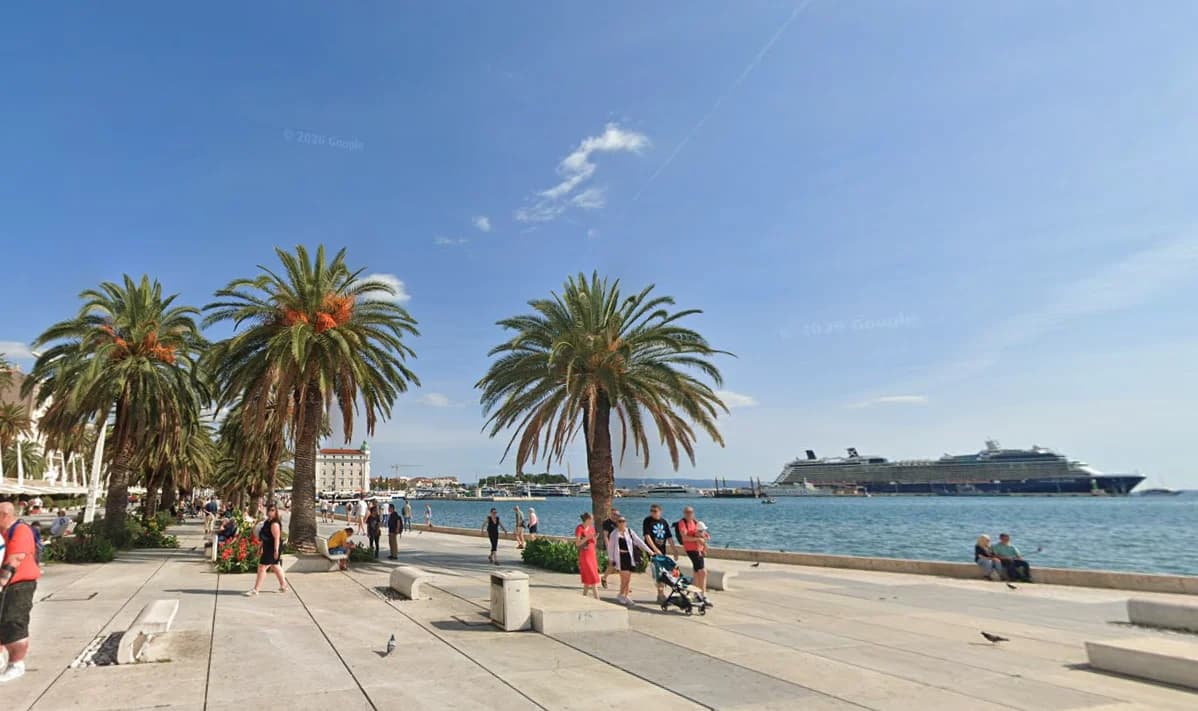
Explore Split
Split is the second-largest city in Croatia and the unofficial capital of beautiful Dalmatia. Its most famous symbol is the magnificent Diocletian's Palace, an ancient UNESCO-protected monument formin...
You might also be interested in

7 Attempts to Conquer and Subjugate Dubrovnik: From Medieval Wars to Great Serbian Aggression

Croatia is Still the Best Choice in Europe
In recent seasons, the same almost template-like debate has resurfaced in the public space, on travel forums, and across regional media: Has Croatia become too expensive, are we "overpriced," and will budget-friendly destinations in the Mediterranean and neighboring regions completely replace us? Media headlines compete in displaying receipts from Adriatic terraces, highlighting isolated examples of high prices for coffee, pizza, ice cream, or beach loungers in exclusive locations, building a narrative that vacationing on the Croatian coast has become a luxury affordable only to the wealthiest.
Subscribe
The best stories about Croatia straight to your inbox every Sunday.